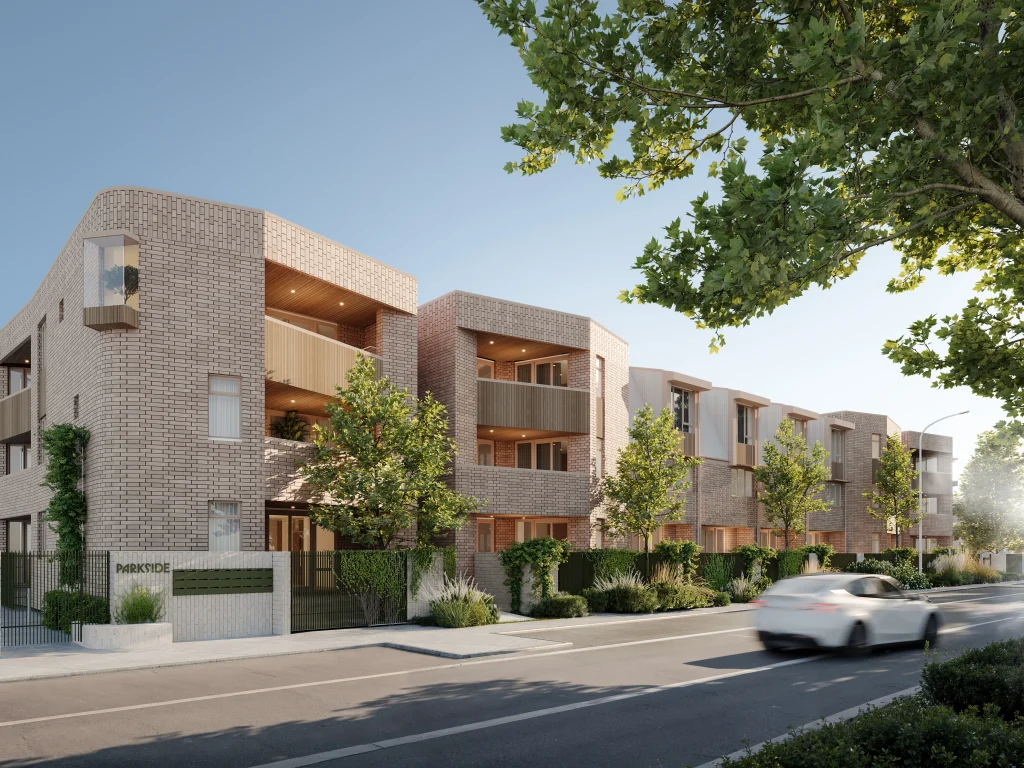
Even the most carefully considered kitchen floor plan can be difficult to communicate on paper. Dimensions, material choices, lighting conditions, spatial flow — none of these translate reliably from a 2D drawing to a client’s imagination. That’s where 3D kitchen floor plans change the conversation entirely.
At Coralo Render , we work with architects, interior designers, and developers to transform existing kitchen plans into photorealistic 3D visuals — renders, floor plans, virtual tours, and animations that make every design decision immediately clear. Whether you’re presenting to a private client, seeking project approval, or marketing a pre-construction development, a well-executed 3D kitchen layout removes ambiguity and builds confidence.
Kitchen Layouts That Benefit Most from 3D Visualization
Every kitchen configuration presents its own visualization challenges. Here’s how 3D rendering addresses the most common ones.
- L-Shaped Kitchens The open corner of an L-shaped layout is intuitive to a designer but rarely obvious to a client. A 3D kitchen layout shows exactly how the corner transitions into the dining or living area, how traffic flows, and how the space feels at eye level — details a floor plan simply cannot convey.
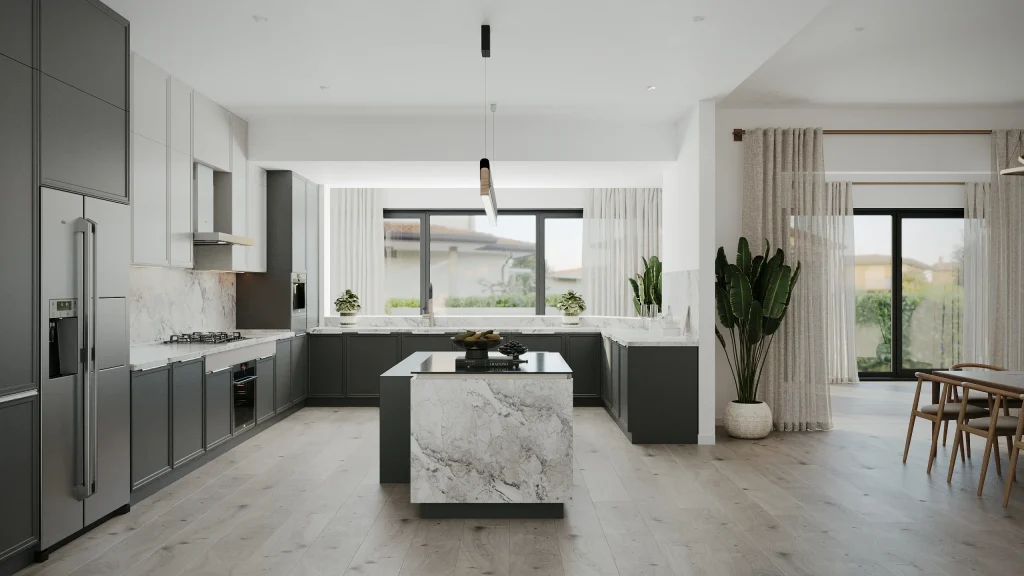
- U-Shaped Kitchens U-shaped designs involve three walls of cabinetry and appliances, creating a workspace that can feel either efficient or claustrophobic depending on proportions. In 2D, it’s nearly impossible to assess whether the clearances feel comfortable. A photorealistic 3D render makes that judgment immediate.
- Galley Kitchens The corridor format of a galley kitchen is one of the hardest layouts to sell from a drawing. In 3D, clients can see how the narrow space actually functions — how light moves through it, how the surfaces interact, and whether the proportions work for the intended use.
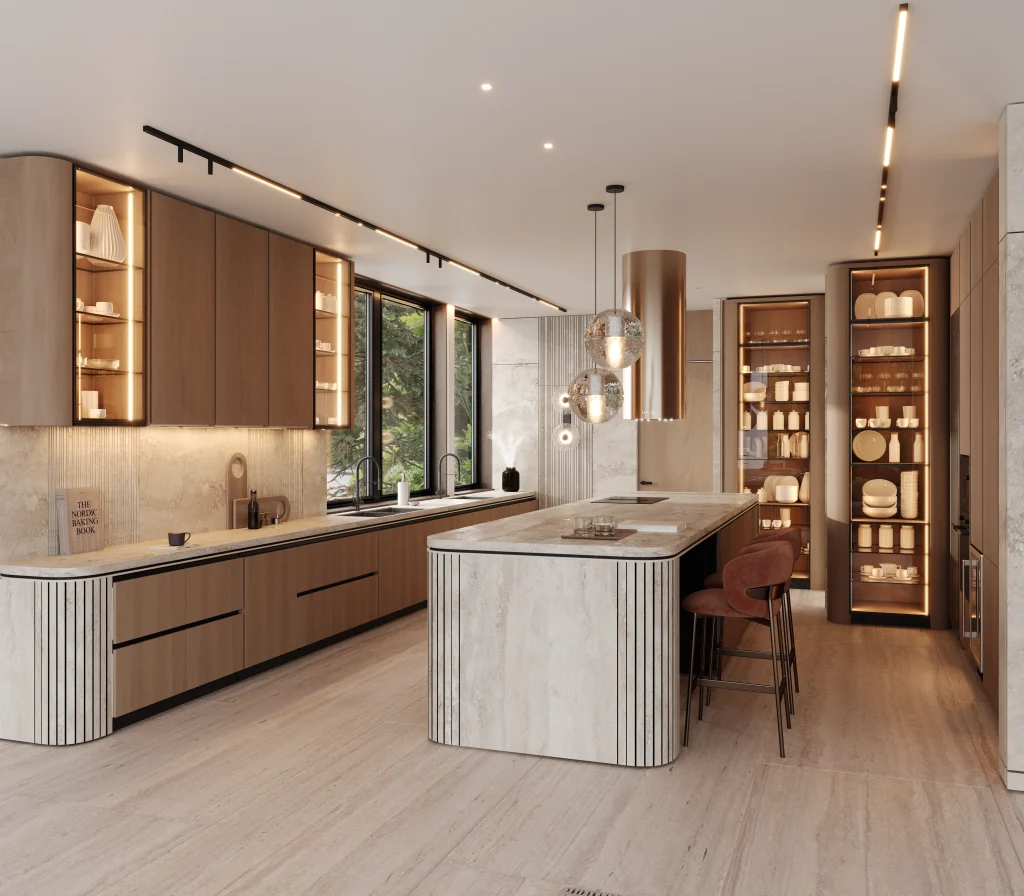
- Island and Peninsula Kitchens Island proportions are critical. Too large and the kitchen feels obstructed; too small and the island loses functional value. 3D kitchen floor plans show the island in context — relative to surrounding counters, appliances, and seating — making sizing decisions far easier to approve.
- Open-Concept Kitchens When a kitchen connects directly to a living or dining area, the visual relationship between spaces matters as much as the kitchen design itself. 3D visualization is the only reliable way to show how the kitchen integrates with adjacent zones — sightlines, material transitions, and the overall sense of openness.
Explore Coralo Render’s 3D Floor Plans service to see how we handle each layout type.
Why 3D Visualization Makes Kitchen Floor Plans Work Harder
3D visualization makes kitchen floor plans more effective by translating technical drawings into photorealistic images that clients, buyers, and investors can immediately understand.
If you already have a kitchen design ready, 3D visualization isn’t an extra step — it’s what makes the design work in front of an audience.
- Clients see the result, not the drawing. The most common source of post-construction disappointment is the gap between what a client imagined and what was actually built. A photorealistic kitchen render closes that gap before work begins, reducing costly revisions and misunderstandings.
- Faster approvals. Explaining a kitchen plan in words takes time and rarely lands cleanly. A photorealistic image communicates in seconds. For design firms managing multiple projects and approvals, this efficiency compounds significantly.
- Design issues surface early. An undersized island, a poorly positioned window, a countertop that crowds the walkway — these problems are easy to miss on a floor plan and expensive to fix after construction. In 3D, they’re immediately visible.
- A sales tool for developers and agents. For residential developments and real estate marketing, kitchen renders are among the most effective assets available. Buyers connect emotionally with a kitchen more than almost any other room — and a photorealistic kitchen plan 3D render gives them something tangible to respond to before the building exists.
- Multiple formats from one project. A single kitchen design can be delivered as a static render, a 3D floor plan, a virtual tour, or a full animation — depending on what the project requires. Each format serves a different audience and purpose without requiring the design to be rebuilt from scratch.
From Floor Plan to Photorealistic Render: How the Process Works
The workflow from kitchen design to finished 3D visual is more straightforward than most clients expect.
- Step 1 — The designer or architect prepares the project. This includes the floor plan, elevations, material specifications, and any reference images that communicate the intended style and finish level.
- Step 2 — Materials are handed off to the visualization studio. Along with the drawings, the designer provides preferences for lighting, mood, camera angles, and any specific details that matter to the client or the intended use of the renders.
- Step 3 — The studio builds a precise 3D model. Every dimension from the floor plan is replicated in 3D — cabinetry, appliances, countertops, openings, and ceiling heights are all modeled to specification.
- Step 4 — Materials, lighting, and details are applied. This is where the render comes to life. Real-world material libraries, natural and artificial lighting setups, and fine details like hardware, textures, and reflections are added to produce a photorealistic result.
- Step 5 — Final deliverables are produced. Depending on the project brief, the output may include photorealistic still images, a top-down 3D floor plan, an interactive virtual tour, or a walkthrough animation.
This is what studios like Coralo Render do — take your kitchen plans and turn them into visuals that clients, investors, and buyers instantly understand.
Browse our Portfolio to see recent kitchen visualization projects.
Ready to Visualize Your Kitchen Design?
Have a kitchen project that needs professional 3D visualization? From photorealistic renders to 3D floor plans and virtual tours — Coralo Render brings your designs to life. Get in touch to discuss your project.
Frequently Asked Questions
What Is a 3D Kitchen Floor Plan?
A 3D kitchen floor plan is a three-dimensional top-down view of a kitchen layout that shows real materials, proportions, and spatial relationships — unlike a flat 2D drawing that requires interpretation. It gives clients, investors, and buyers an immediate, accurate preview of the finished space before construction begins.
What Is the Kitchen Work Triangle?
The kitchen work triangle is the design principle that connects the three primary work zones — refrigerator, sink, and cooktop — into a triangle that minimizes unnecessary movement. Most designers recommend keeping each side of the triangle between 4 and 9 feet. In 3D visualization, the work triangle is easy to assess visually before installation.
How Much Does a Professional 3D Kitchen Render Cost?
A single photorealistic 3D kitchen render typically starts at a few hundred dollars, depending on complexity, number of views, and output format. Full packages — including multiple angles, a 3D floor plan, and a virtual tour — are priced higher. Contact Coralo Render for a project-specific quote.
What Do I Need to Provide for a 3D Kitchen Visualization?
To start a 3D kitchen visualization, you need to provide a floor plan or CAD drawings, elevation views, material and finish specifications, and reference images. The more detail provided upfront, the faster and more accurate the process.
What’s the Difference Between a 3D Floor Plan and a 3D Render?
A 3D floor plan is a top-down view showing layout, dimensions, and spatial organization. A 3D render is a photorealistic eye-level image showing how the space looks and feels. Both serve different purposes — floor plans for structure, renders for client approval and sales.