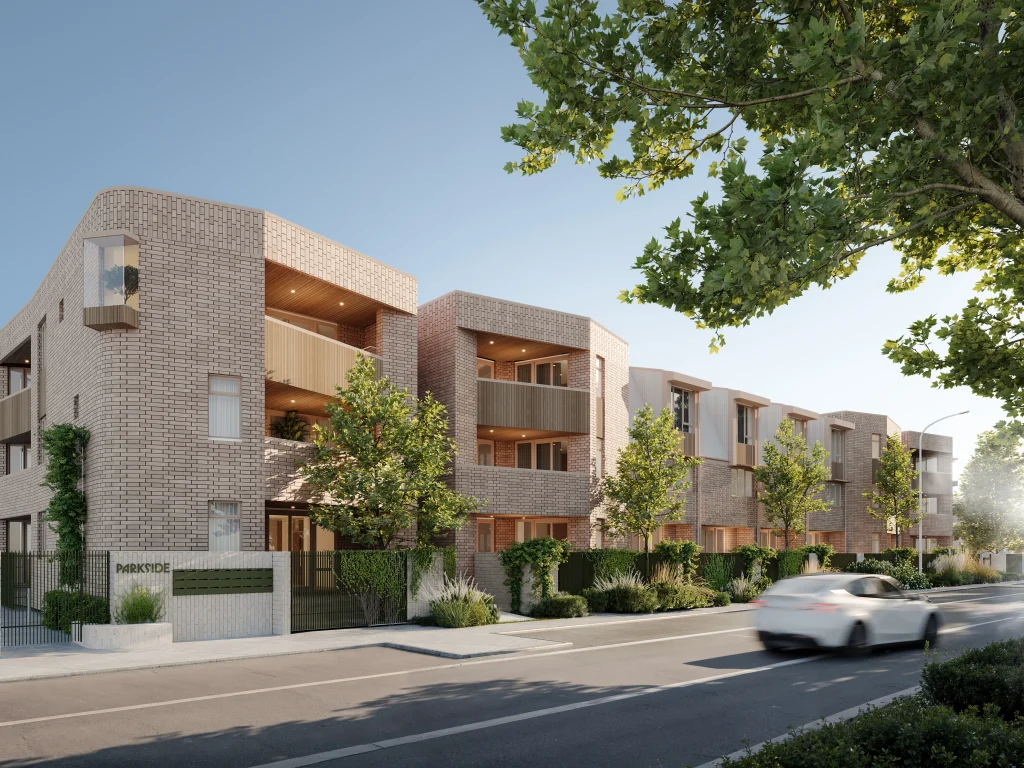
Dallas is one of the fastest-growing metropolitan areas in the United States. The city’s development pipeline spans luxury residential towers in Uptown, mixed-use projects in Deep Ellum, master-planned communities across the suburbs, and commercial campuses in the Design District. For architects and developers working in this market, 3D architectural rendering has become a standard part of the project workflow — from early design presentations to pre-sale marketing and investor pitches.
This guide covers how 3D rendering is used across Dallas’s key project types, what the city’s architectural diversity means for visualization, and what to consider when selecting a rendering studio for your next project. Coralo Render works with architects and developers on projects across the Dallas–Fort Worth area and the broader US market.
Dallas’s Development Market and the Role of 3D Rendering
Dallas is not a market where 3D rendering is an optional enhancement. The scale of development activity, the diversity of buyer profiles, and the pace of the construction cycle all create conditions where strong visual materials are a practical necessity rather than a presentation luxury.
One of the Fastest-Growing Construction Markets in the US
Dallas–Fort Worth consistently ranks among the top US metros for new construction activity across residential, commercial, and mixed-use categories. New apartment communities are leasing before completion in Uptown and Oak Lawn. Commercial office campuses are being pitched to corporate tenants in Legacy West and Frisco before the first floor is built. Master-planned residential communities in McKinney, Prosper, and Southlake are selling homes from model units and marketing centers.
In each of these contexts, 3D rendering serves a direct business function: it allows developers, architects, and sales teams to present a project compellingly before it exists physically. In a market with this volume of concurrent development activity, the quality of those visuals is a competitive variable that affects leasing velocity, pre-sale performance, and investor confidence.
Out-of-State and Corporate Relocation Buyers
Texas has attracted significant corporate and individual relocation from higher-tax states, particularly California, New York, and Illinois. The absence of a state income tax, combined with Dallas’s business infrastructure and cost of living relative to coastal metros, has driven sustained in-migration that directly affects the residential real estate market.
A large share of these buyers make purchase decisions remotely or during short exploratory visits. They are evaluating Dallas properties without the deep local familiarity that a long-term resident would have. High-quality 3D renderings, floor plans, and virtual tours allow these buyers to understand a property’s spatial qualities, finishes, and neighborhood context without requiring extended in-person time — which directly supports sales conversion for developers targeting this demographic.
A Diverse Market Across a Large Geography
The DFW metroplex encompasses an unusually wide range of project types and submarkets within a single metro area. Luxury single-family custom homes in Highland Park and University Park. Multifamily apartments and mixed-use developments in Uptown, Lower Greenville, and Deep Ellum. Suburban master-planned communities in Frisco, Allen, and Celina. Commercial and industrial developments across multiple business corridors.
Each of these segments has different visualization requirements, different buyer audiences, and different marketing contexts. A rendering approach calibrated for a luxury townhouse in Knox-Henderson will not serve a suburban apartment community in Plano. Architectural diversity at this scale requires a visualization studio with genuine range across project types.
Types of 3D Rendering Most Used in Dallas Projects
Dallas’s development landscape generates demand for several distinct rendering formats. Understanding which format fits which context is the first step in briefing a visualization studio effectively.
Exterior Rendering for Residential and Commercial Development
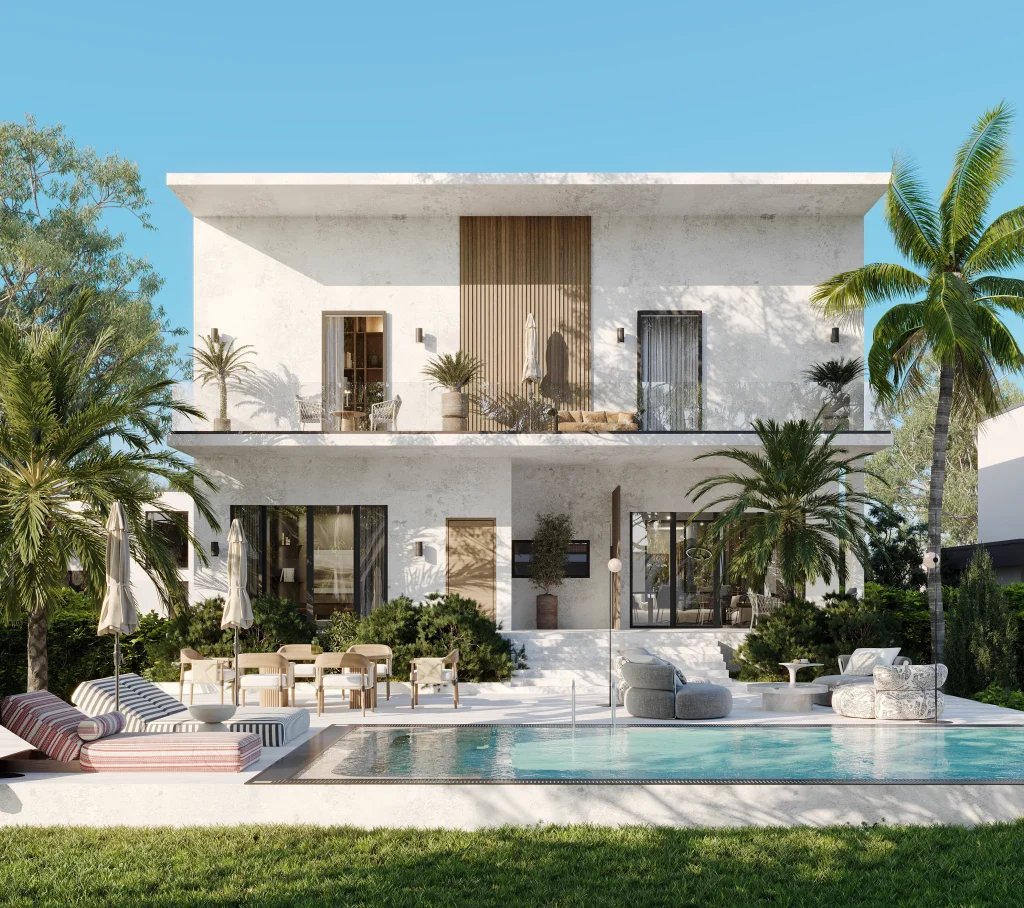
Exterior architectural rendering is the most in-demand format across Dallas’s development market. Single-family homes in Highland Park and Preston Hollow, luxury townhouses in Uptown and Knox-Henderson, commercial buildings in the Design District, and mixed-use projects in Bishop Arts and Deep Ellum all require photorealistic exterior renders for marketing materials, broker presentations, and city planning submissions.
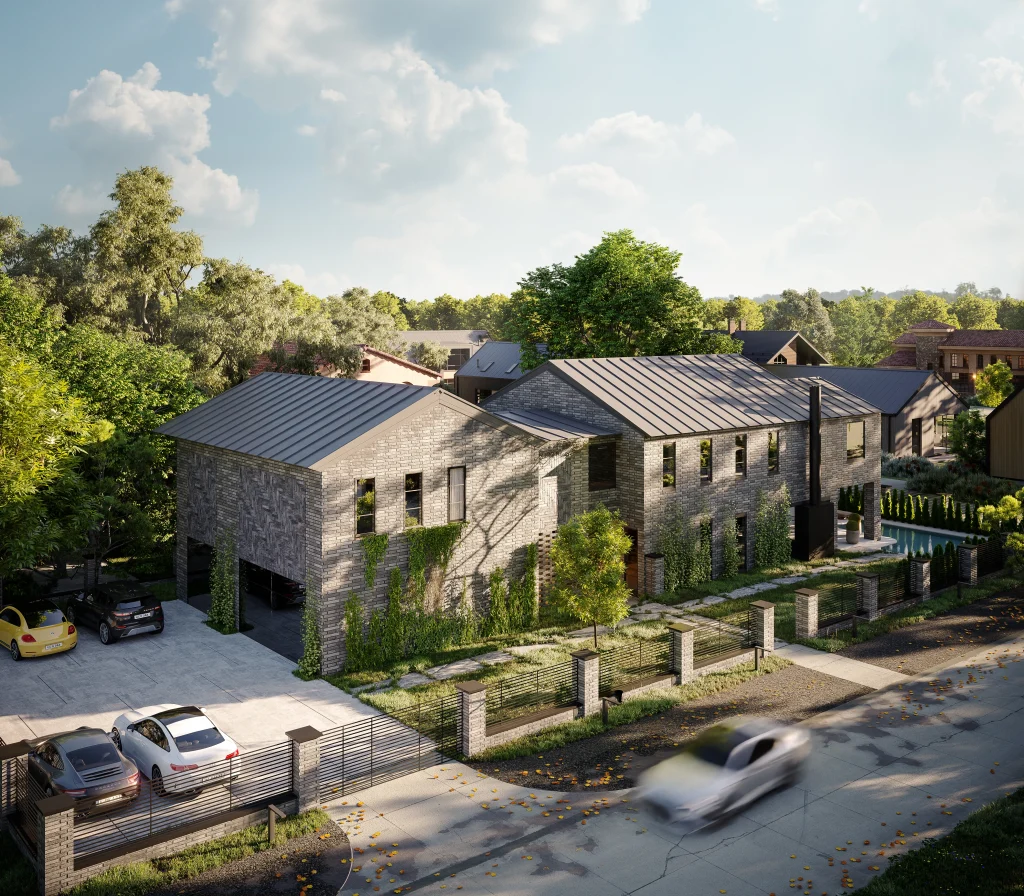
Dallas-specific consideration: a significant portion of the market involves single-family and low-rise residential, where the render needs to accurately capture brick, stone, and stucco facade materials, mature tree canopy, and the spatial relationship between the home and its lot. These details are as important as the architecture itself for the buyers evaluating this type of property.
Explore Coralo Render’s 3D Exterior Rendering services for residential and commercial projects.
Interior Rendering for Luxury Residential and Commercial
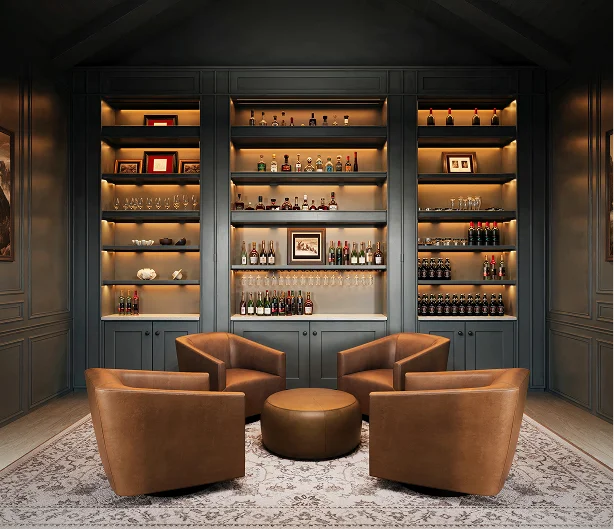
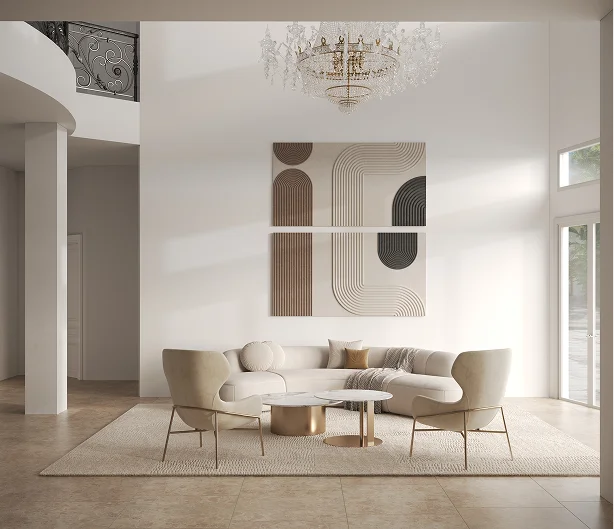
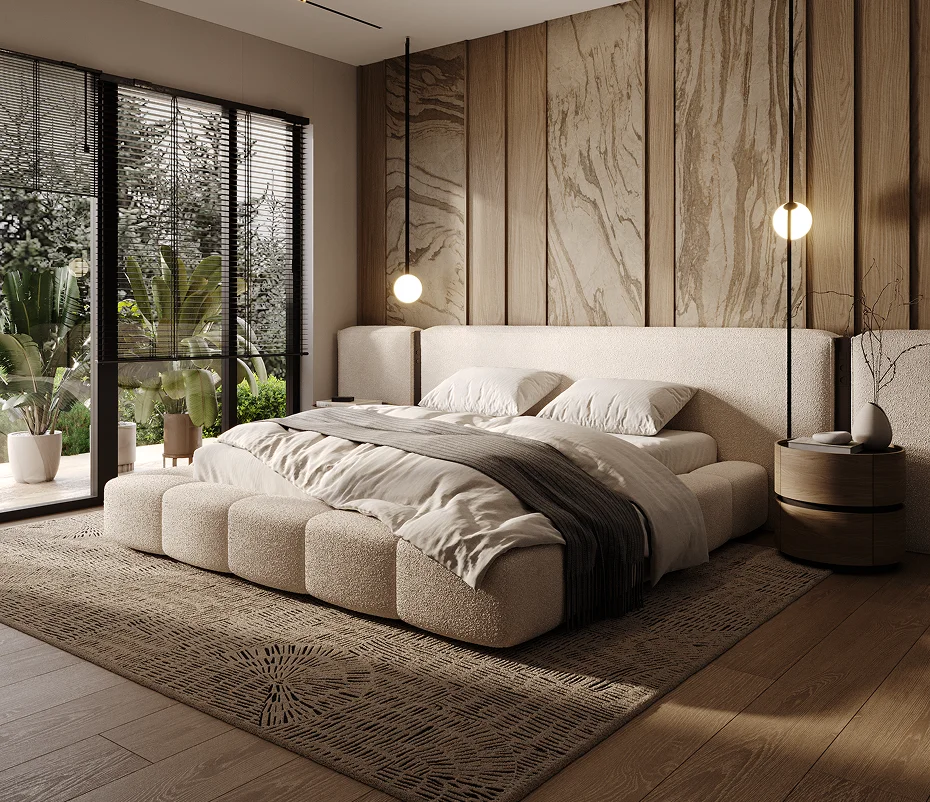
Luxury residential in Preston Hollow, Turtle Creek, and University Park, boutique hospitality in Deep Ellum and Uptown, and corporate interiors in Legacy West and Downtown all require interior renders that communicate material quality and spatial atmosphere before construction or renovation begins.
For commercial leasing, interior renderings serve a specific function in tenant presentations: they show a prospective tenant how their space will look and feel once built out, which is often the deciding factor in a leasing decision when multiple buildings are competing for the same tenant. A photorealistic render of a finished office floor is more persuasive than a tour of an empty concrete shell.
Explore 3D Interior Rendering services for residential and commercial projects.
3D Floor Plans for Multifamily and Mixed-Use
The Dallas multifamily market — active across Uptown, Oak Lawn, Deep Ellum, and lower-density suburban submarkets — uses 3D floor plans as a standard component of pre-lease marketing. They communicate unit layout, room proportions, and spatial flow in a format that prospective tenants can read without architectural training.
For mixed-use developments, 3D floor plans help potential buyers and tenants understand how residential, retail, and amenity components relate to each other — which is often one of the key selling points of a mixed-use project. A well-produced 3D floor plan communicates this more effectively than a site diagram or a 2D unit plan.
Explore 3D Floor Plans for development and pre-leasing applications.
Virtual Tours for Remote and Corporate Relocation Buyers
Given the volume of out-of-state and corporate relocation buyers in Dallas’s residential market, interactive 3D virtual tours have moved from a premium feature to a practical sales tool. A buyer relocating from San Francisco for a corporate move can walk through a new construction home in Southlake or a luxury condo in Uptown from a laptop — assessing room proportions, finishes, and layout before booking a flight.
For corporate real estate decisions, virtual tours allow HR teams and executives to present future office spaces to employees who haven’t yet relocated, which supports workforce planning alongside the real estate decision.
Explore 3D Virtual Tours for residential and commercial projects.
Dallas Architecture: What Shapes the Visualization Approach
Dallas’s built environment is genuinely diverse — not in a generic sense, but in ways that have specific implications for how a rendering studio approaches each project.
Architectural Diversity Across Neighborhoods
The city’s neighborhoods represent a wide range of architectural traditions. Georgian and Tudor Revival architecture define the residential character of Highland Park and University Park. Mid-century modern and contemporary styles predominate in Oak Lawn and Turtle Creek. Industrial warehouse conversions shape the aesthetic of Deep Ellum and Bishop Arts. Contemporary glass towers characterize Uptown and Downtown. Suburban traditional and transitional styles are the norm across the master-planned communities in Frisco, McKinney, and Prosper.
Each of these styles has distinct rendering requirements. Brick and stone facades on a Highland Park Tudor behave differently under light than glass curtain wall on a Downtown tower. The scale, massing, and contextual relationships in a suburban lot render are entirely different from a dense urban infill project. A studio that applies the same visual approach to every project type will produce results that feel generic regardless of technical execution quality.
Texas Light and Open Sky
Texas is characterized by an abundance of clear, high-intensity sunlight and an expansive sky that reads differently in a render than the overcast or filtered light conditions common in northern and coastal markets. Exterior renders for Dallas projects need to capture the quality of Texas sun — the sharpness of shadows at midday, the warmth of late afternoon light on brick and stone, the wide open sky above low-rise suburban neighborhoods.
A render produced with lighting calibrated for Seattle or Chicago will look subtly wrong in a Dallas context — the shadows will be soft when they should be sharp, the sky will look grey when it should be bright, the materials will look flat when they should have the depth that direct Texas sunlight produces. This is one of the more reliable ways to identify whether a studio has genuine experience with Sun Belt architectural projects.
Suburban Scale and Landscape Context
A substantial portion of Dallas’s residential market exists at suburban scale — large lots, mature trees, wide setbacks, and the visual relationship between a home and its landscaping. This is the predominant context in Highland Park, Preston Hollow, University Park, and the North Dallas suburbs.
Rendering at suburban scale requires attention to elements that urban project renderings often underemphasize: the quality and species accuracy of tree and shrub vegetation, the relationship between the home and the street, driveway and hardscape materials, and the sense of spaciousness that characterizes these neighborhoods. Getting these details right is what makes a suburban residential render look authentically Texan rather than generically residential.
What to Look for in a 3D Rendering Studio for Dallas Projects
Choosing a visualization studio for a Dallas project involves a few considerations specific to this market’s characteristics.
Range across project types. Dallas’s development activity spans custom residential, multifamily, commercial, hospitality, and master-planned suburban projects. A studio with genuine range across these categories applies the right visual approach to each — not a uniform template. Ask to see portfolio work across multiple project types before committing.
Portfolio that includes Texas and Sun Belt context. Exterior renders for Texas projects should look like Texas. Ask to see examples that include direct sunlight conditions, wide suburban lots, brick and stone facades, and open sky. A studio with Sun Belt rendering experience produces results that feel contextually accurate rather than climatically displaced.
Turnaround that supports Dallas’s construction pace. DFW’s development market operates on compressed timelines. Zoning submissions, pre-sales launches, broker events, and investor meetings often have fixed dates. Ask about standard turnaround times and the availability of rush delivery before beginning a project.
Transparent revision process. Architectural visualization is iterative by nature. A clearly defined revision scope and a straightforward policy on changes — what’s included, what triggers additional cost — keeps a project on schedule and avoids friction at the review stage.
Coralo Render works with architects, developers, and design firms on 3D rendering projects across Dallas–Fort Worth and the US market. Browse our portfolio to see recent architectural visualization work across project types.
Ready to Start Your Dallas Rendering Project?
Working on a development in Dallas and need professional 3D architectural rendering? From luxury residential to commercial, multifamily, and master-planned communities — Coralo Render delivers photorealistic visuals built for the DFW market. Get in touch to discuss your project.
Frequently Asked Questions
What 3D rendering services are most used for Dallas architectural projects?
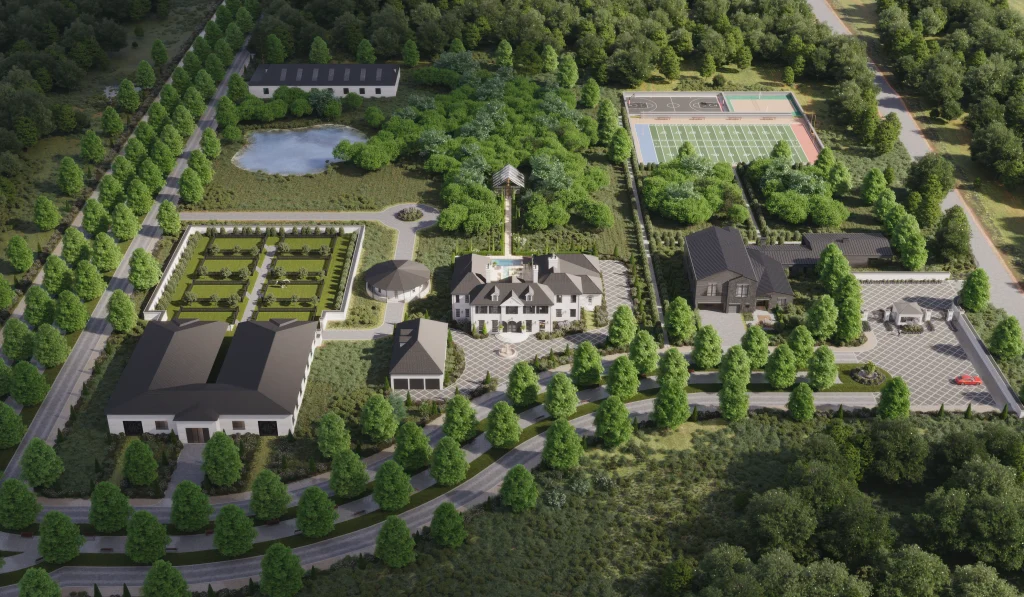
The most common services are exterior architectural renders for residential and commercial developments, interior renders for luxury residential and commercial leasing, 3D floor plans for multifamily and mixed-use pre-leasing, and virtual tours for out-of-state and corporate relocation buyers. Aerial site plan renders are also widely used for large-scale master-planned projects across the DFW suburbs.
Why is 3D rendering important for the Dallas real estate market?
Dallas is one of the fastest-growing construction markets in the US, with strong competition across all project types and a large volume of out-of-state buyers making purchase decisions remotely. 3D rendering allows developers to market projects before construction is complete and helps architects communicate design intent clearly to clients, investors, and planning review boards.
How long does a 3D rendering project take for a Dallas development?
A standard exterior or interior render typically takes 3–5 business days depending on complexity and the number of views required. Floor plans are similar in timeline. Virtual tours and animations require longer production time. Rush timelines are available for time-sensitive submissions or marketing launches — contact Coralo Render to discuss your schedule.
What files are needed to start a 3D rendering project?
CAD drawings, architectural floor plans, or detailed sketches with accurate dimensions. Supporting materials include finish specifications, material and landscape references, and site context details. For Dallas suburban projects, lot dimensions, setbacks, and vegetation context are often central to the render quality and should be included in the project brief.
How much do 3D rendering services in Dallas TX cost?
Pricing depends on the project type, number of views, complexity, and output format — still renders, floor plans, virtual tours, or animation. A single photorealistic exterior render typically starts at a few hundred dollars. Contact Coralo Render for a project-specific quote based on your scope and timeline.