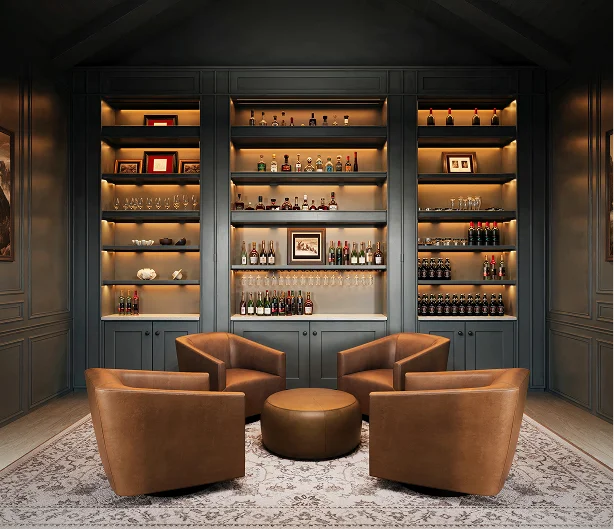
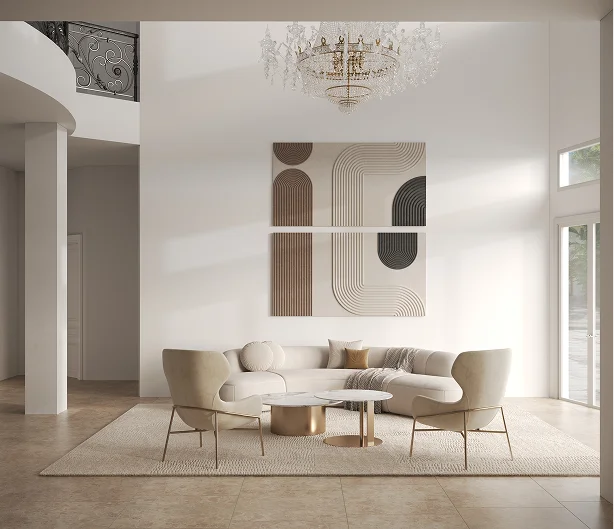
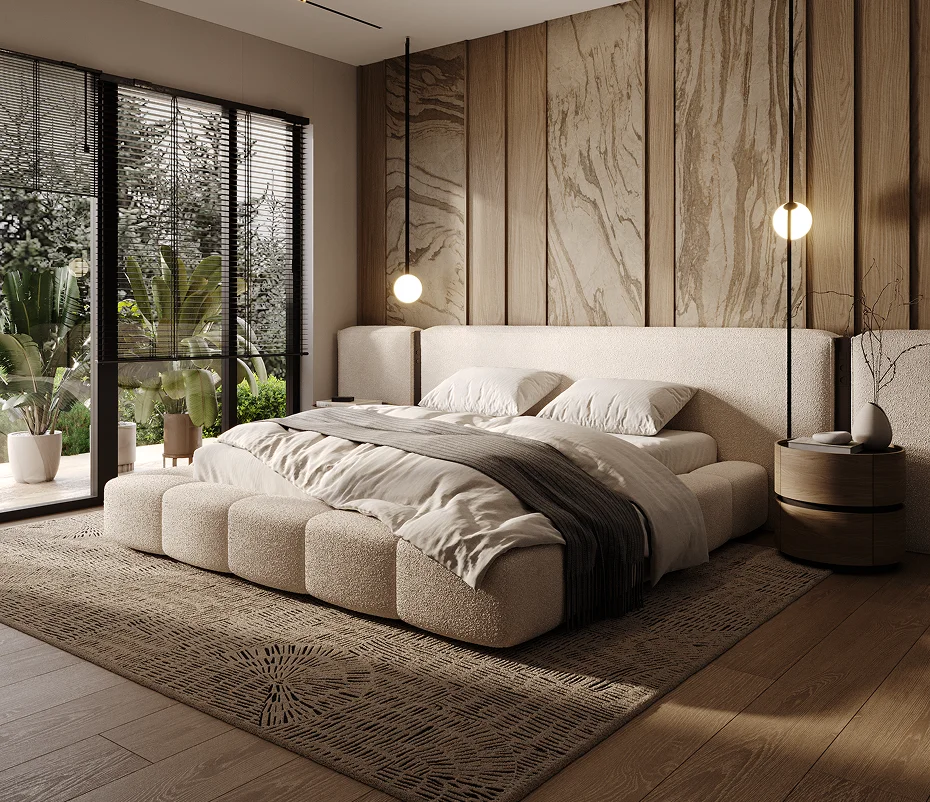
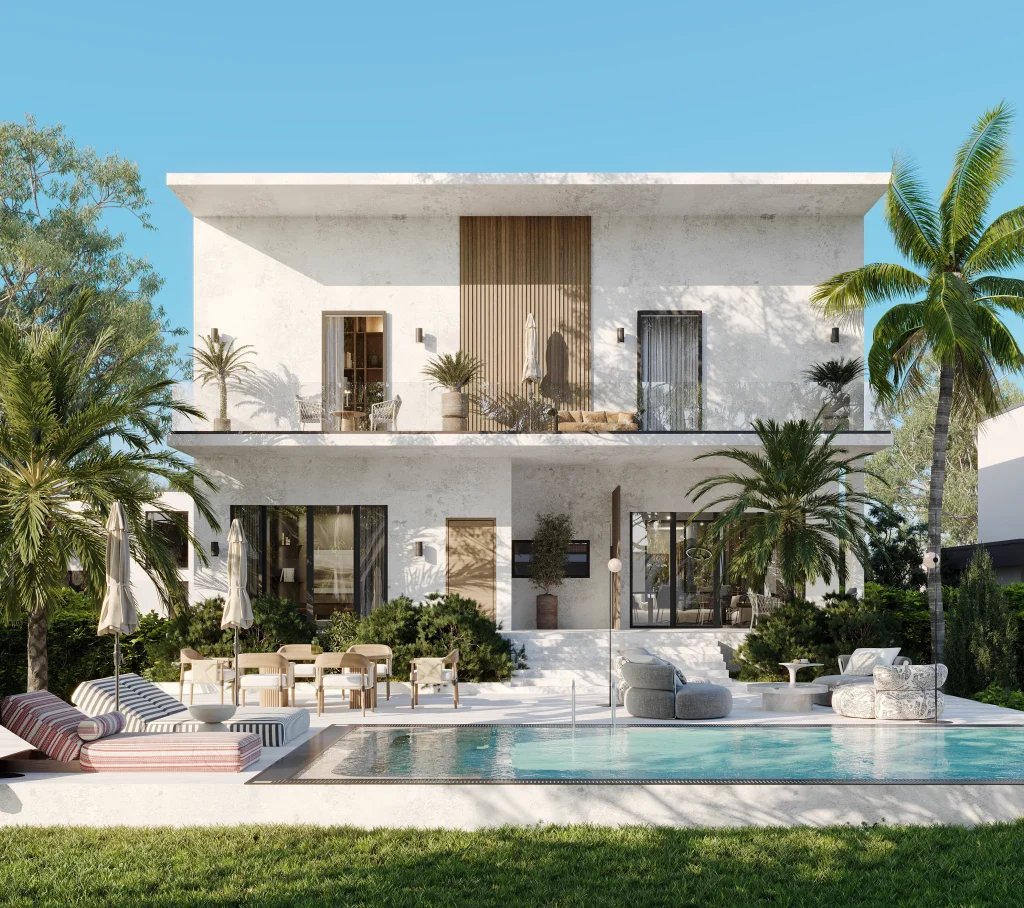
Furniture brands, manufacturers, and interior designers no longer need physical prototypes or expensive photoshoots to create compelling product visuals. 3D furniture rendering delivers photorealistic images of any furniture piece — from a single chair to an entire collection — before the product is manufactured, shipped, or staged.
At Coralo Render, we provide professional 3D furniture rendering services for brands, designers, and manufacturers who need high-quality visuals for catalogs, e-commerce, marketing campaigns, and client presentations. Every render we produce is built to look indistinguishable from photography — with precise material accuracy, realistic lighting, and full attention to detail.
What Is 3D Furniture Rendering?
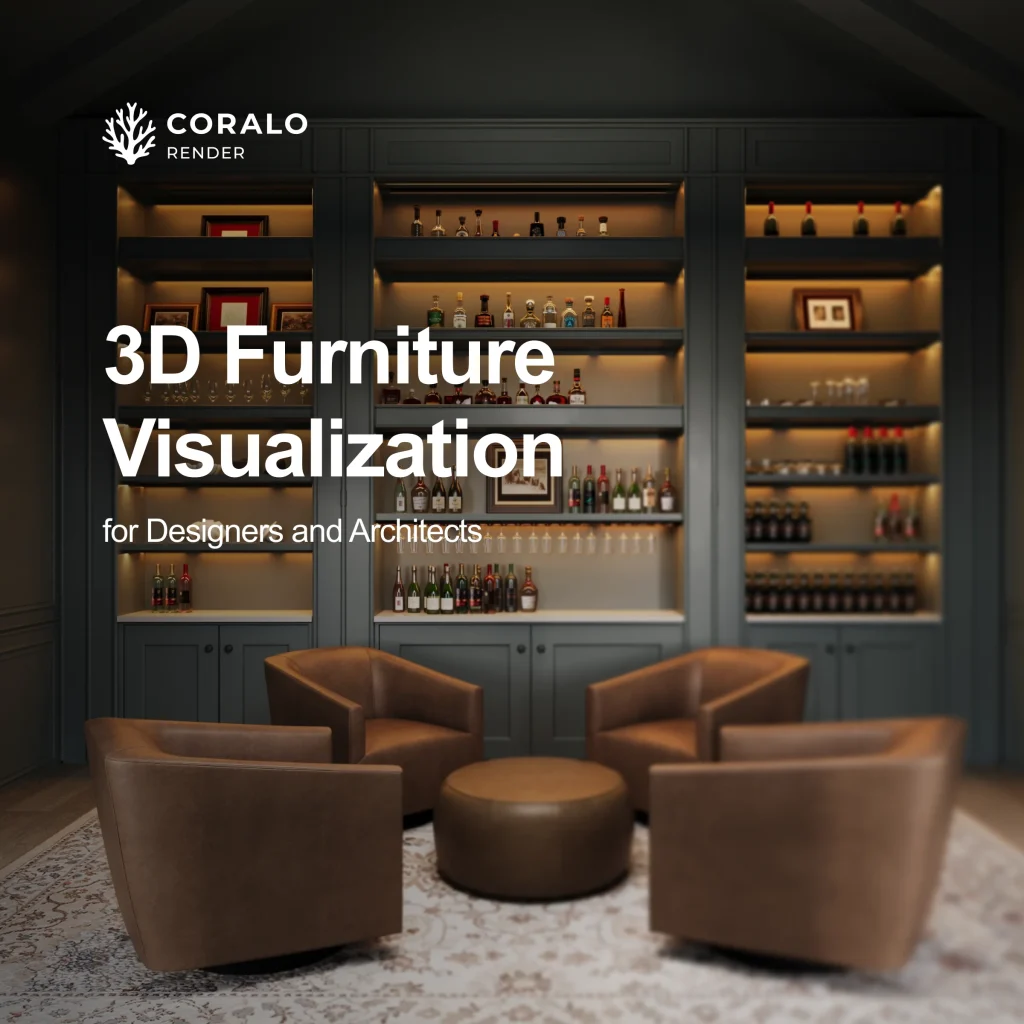
3D furniture rendering is the process of creating photorealistic digital images of furniture pieces using 3D modeling software, without the need for physical prototypes or traditional photography.
The process begins with a 3D model — built from CAD files, technical drawings, or existing geometry — and ends with a finished image that shows the piece exactly as it will look in the real world. Materials are applied from real-world libraries: fabric weaves, wood grains, leather textures, metal finishes. Lighting is calibrated to match the intended environment, whether that’s a clean studio background or a fully styled interior scene.
The result is an image that performs everywhere photography does — on product pages, in print catalogs, across advertising campaigns — without the logistics, cost, or timeline of a physical shoot. For furniture brands launching new collections, testing colorways, or marketing products before production begins, 3D furniture rendering has become the industry standard.
Types of 3D Furniture Rendering We Offer
Depending on your use case — e-commerce, catalog, brand marketing, or client presentation — the right format makes the difference between a visual that performs and one that doesn’t. Coralo Render produces all primary furniture rendering formats from a single 3D model.
Silo Renders
A silo render presents the furniture piece on a clean white or neutral background, isolated from any environment. This is the standard format for e-commerce platforms, product catalogs, and marketplace listings — anywhere the goal is to show the design clearly and without distraction.
Silo renders are the most efficient format: fast to produce, easy to repurpose across channels, and universally accepted by retail platforms. For brands managing large SKU counts, silo rendering is the most scalable way to build consistent product imagery.
Lifestyle Renders
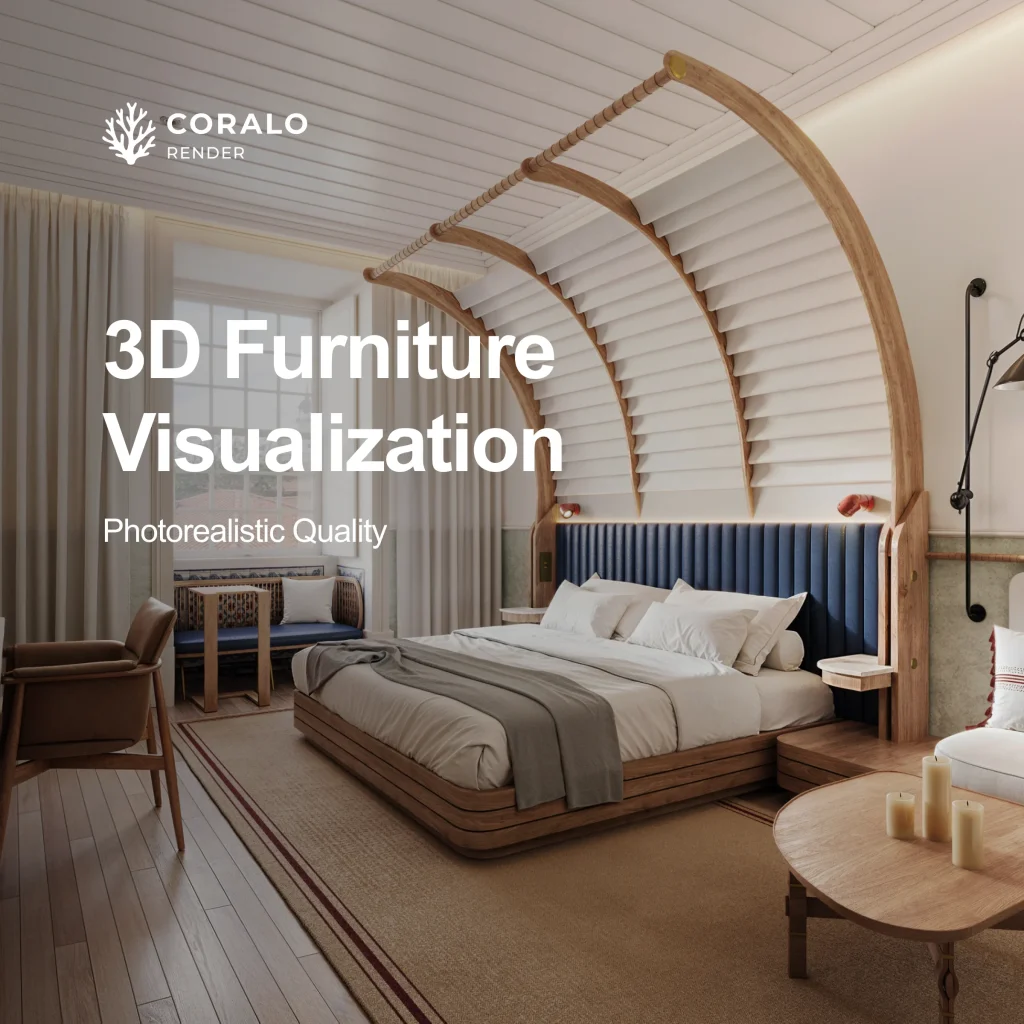
A lifestyle render places the furniture in a fully designed environment — an interior scene, an outdoor setting, or a branded spatial context. This format is used for advertising campaigns, social media content, editorial features, and any context where the goal is to create an emotional response rather than simply show the product.
The advantage over traditional lifestyle photography: any environment, any lighting condition, any time of day — without booking a location, renting props, or shipping the furniture. A sofa can be shown in a Scandinavian living room and a New York loft in the same week, from the same 3D model.
360° Product Views
A 360° render allows customers to rotate the furniture piece interactively in a browser, examining it from any angle. This format significantly improves buyer confidence on e-commerce product pages — particularly for high-consideration purchases where customers want to inspect construction, proportions, and detail before committing.
360° views replace the need for dozens of static shots from multiple angles, delivering a more complete and engaging product experience.
3D Product Animation
A furniture animation delivers the product as video — a rotating view, a cinematic reveal, or a walkthrough of the piece in context. Used for social media content, digital advertising, trade show presentations, and brand campaigns, animation communicates details and craftsmanship that static images cannot.
A single animation can be repurposed across Instagram, YouTube, digital billboards, and presentation decks without additional production cost.
Furniture Types We Render
Residential Furniture
Sofas, armchairs, beds, dining tables, wardrobes, kitchen cabinets, and home accessories. Residential furniture is the most volume-intensive category for 3D rendering — brands selling direct-to-consumer or through retail channels need consistent, high-quality imagery across entire collections, often in multiple colorways and configurations.
Office and Commercial Furniture
Desks, task chairs, storage systems, conference tables, and workspace accessories. Office furniture visualization serves corporate catalog production, tender documentation, and specification presentations where buyers need to see the product in a professional context before purchasing at scale.
Hospitality and Outdoor Furniture
Hotel lobbies, restaurant dining areas, lounge spaces, and outdoor terraces. Hospitality furniture often requires lifestyle renders that communicate atmosphere and guest experience — not just the object itself. Outdoor furniture visualization captures the piece in seasonal and weather conditions that would be impractical or costly to achieve with traditional photography.
Luxury and Custom Furniture
Bespoke pieces, limited editions, and high-end collections where material accuracy is critical. Rendering luxury furniture requires exceptional attention to surface detail — the grain of hand-selected walnut, the texture of hand-stitched leather, the finish of brushed brass hardware. Coralo Render’s experience with international projects in the luxury segment means we understand the standard these visuals need to meet.
Why 3D Rendering Outperforms Traditional Furniture Photography
No Product Needed Before Production
3D rendering allows furniture brands to market a product before it exists physically. Pre-orders can be collected, campaigns can launch, and retail buyers can be briefed — all before the first prototype leaves the factory. For brands entering new markets or launching new collections, this compresses the go-to-market timeline significantly.
Unlimited Variations Without a Reshoot
When a furniture piece is available in six upholstery options and three wood finishes, traditional photography means eighteen separate shoots. In 3D, changing a material is a texture swap — typically completed in hours, not days. The base model is built once; every variation is generated from it. This makes 3D rendering dramatically more cost-effective than photography for any brand managing product variants or configurable options.
Any Environment, Any Lighting, Any Angle
A physical photoshoot is bounded by the studio, the available props, the weather, and the production schedule. A 3D render has none of these constraints. The same furniture piece can be shown in a minimalist Japanese interior and a richly layered European living room. It can be photographed at golden hour or in overcast daylight. It can be viewed from angles that a physical shoot would require rigging to achieve. The creative brief drives the output — not the logistics.
How the Process Works
Step 1 — Send your project files.
CAD files, technical drawings, or sketches with accurate dimensions. Supporting materials include fabric swatches, finish references, hardware specifications, and mood boards for style direction. The more detail provided upfront, the more accurate the first-round output.
Step 2 — We build the 3D model.
If no existing 3D model is available, Coralo Render builds one from your drawings. High-poly modeling ensures the geometry holds up at any angle and under any lighting condition — from a close-up detail shot to a wide lifestyle scene.
Step 3 — Materials and lighting are applied.
We match your exact specifications: fabric textures, wood grain direction, leather grain, metal finish type, hardware detail. Lighting is set up to suit the intended use case — clean and neutral for silo renders, atmospheric and directional for lifestyle scenes.
Step 4 — Preview and feedback.
A clay render or first color preview is delivered for review before the final render is produced. This is the stage where proportions, material accuracy, and camera angles are confirmed. Revisions are incorporated here, keeping final delivery clean.
Step 5 — Final deliverables.
Production-ready images in the required formats and resolutions — optimized for e-commerce platforms, print catalogs, or digital advertising specifications.
At Coralo Render, this process typically takes 5–10 business days for a standard furniture piece, with shorter timelines available for simpler projects. Browse our Portfolio to see recent furniture and interior visualization projects.
Ready to Replace Your Photoshoot?
Whether you need silo images for e-commerce, lifestyle renders for a brand campaign, or a complete catalog — Coralo Render delivers photorealistic 3D furniture rendering that performs. Get in touch to discuss your project.
Frequently Asked Questions
What is 3D furniture rendering?
3D furniture rendering is the creation of photorealistic digital images of furniture using 3D modeling and rendering software — without a physical product, studio, or photoshoot. It produces visuals indistinguishable from traditional photography, used for e-commerce, catalogs, advertising, and client presentations.
What files do I need to provide to start a furniture rendering project?
CAD files (.dwg, .step), 3D model files (.obj, .fbx), or detailed technical drawings with accurate dimensions. Supporting materials include fabric and finish references, color codes, and mood boards. If you only have sketches or physical samples, Coralo Render can work from those as a starting point.
How long does 3D furniture rendering take?
A standard single furniture render typically takes 5–10 business days depending on complexity, number of views, and whether 3D modeling is required from scratch. Rush timelines are available for time-sensitive projects. Contact Coralo Render for a project-specific estimate.
Can you show the same furniture piece in multiple colors or materials?
Yes — this is one of the primary advantages of 3D rendering over photography. Once the base model is built, changing upholstery fabric, wood finish, or hardware is a texture swap completed in hours. This makes 3D rendering significantly more cost-effective than photography for brands offering multiple configurations or colorways.
What is the difference between silo and lifestyle furniture renders?
A silo render shows the furniture on a clean white or neutral background — the standard for e-commerce and product catalogs. A lifestyle render places the piece in a fully designed interior or exterior environment, used for brand marketing and advertising. Both formats are produced from the same 3D model, so commissioning both is efficient.
Do you work with furniture manufacturers who don’t have 3D models yet?
Yes. If you only have technical drawings, sketches, or physical samples, Coralo Render builds the 3D model from scratch before rendering begins. This complete 3D furniture modeling and rendering service takes your project from drawings to finished images without requiring any existing digital assets.
How much does 3D furniture rendering cost?
Pricing depends on the complexity of the piece, the number of renders required, the format — silo, lifestyle, 360°, or animation — and whether 3D modeling is needed. A single photorealistic silo render typically starts at a few hundred dollars. Contact Coralo Render for an accurate quote based on your specific project scope.