3D rendering costs in 2026 range from a few hundred dollars for a simple still render to $15,000 or more for a minute of high-end architectural animation. Most architectural exterior renders fall between $500 and $2,500 per image; interior renders typically range from $350 to $1,500. The actual price for any project depends on a combination of factors that this guide breaks down clearly — so you can budget accurately before reaching out to a studio.
Understanding rendering pricing means looking beyond simple per-image comparisons. Project scope, required level of detail, turnaround timeline, and the quality of input materials all shape the final cost more than the type of render alone. This guide covers pricing by service type, the key factors that drive cost, common pricing models, and how to structure your project to get the most from your visualization budget.
3D Rendering Prices by Service Type
Rendering prices vary significantly depending on the type of output, the complexity of the project, and how the visuals will be used. Below are current market ranges for each primary service type.
Exterior Architectural Rendering
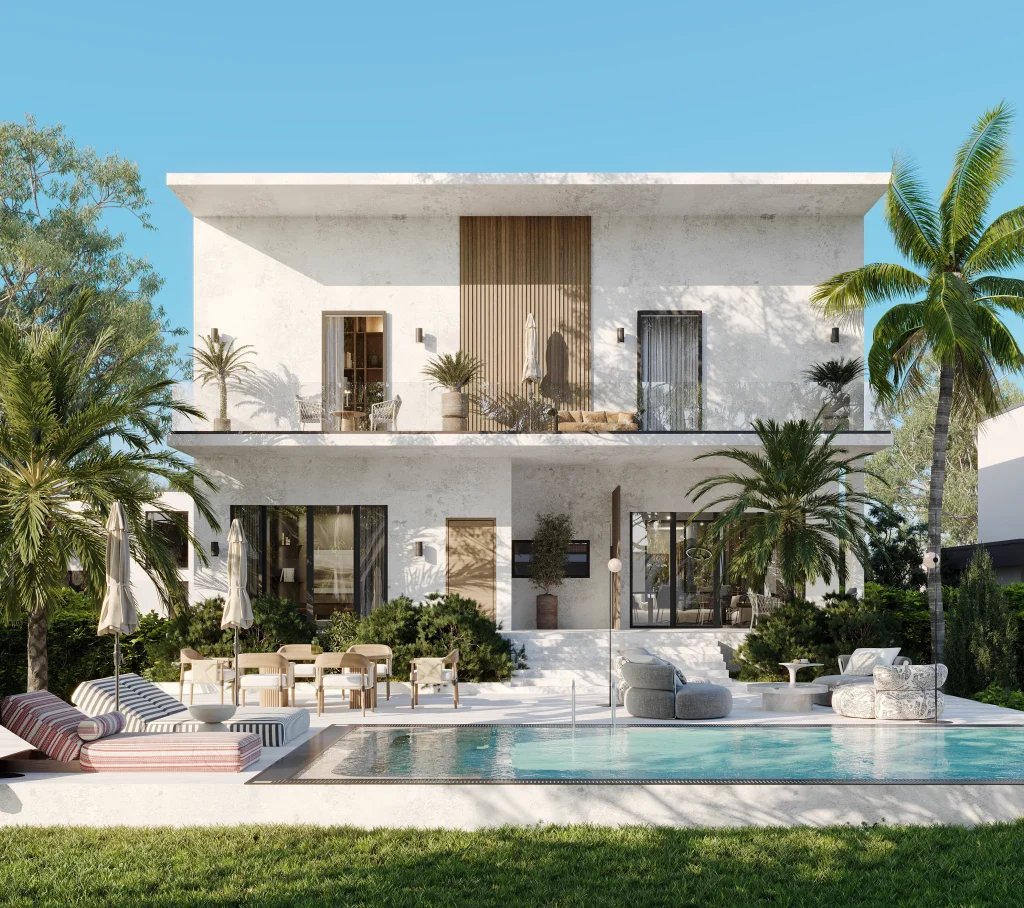
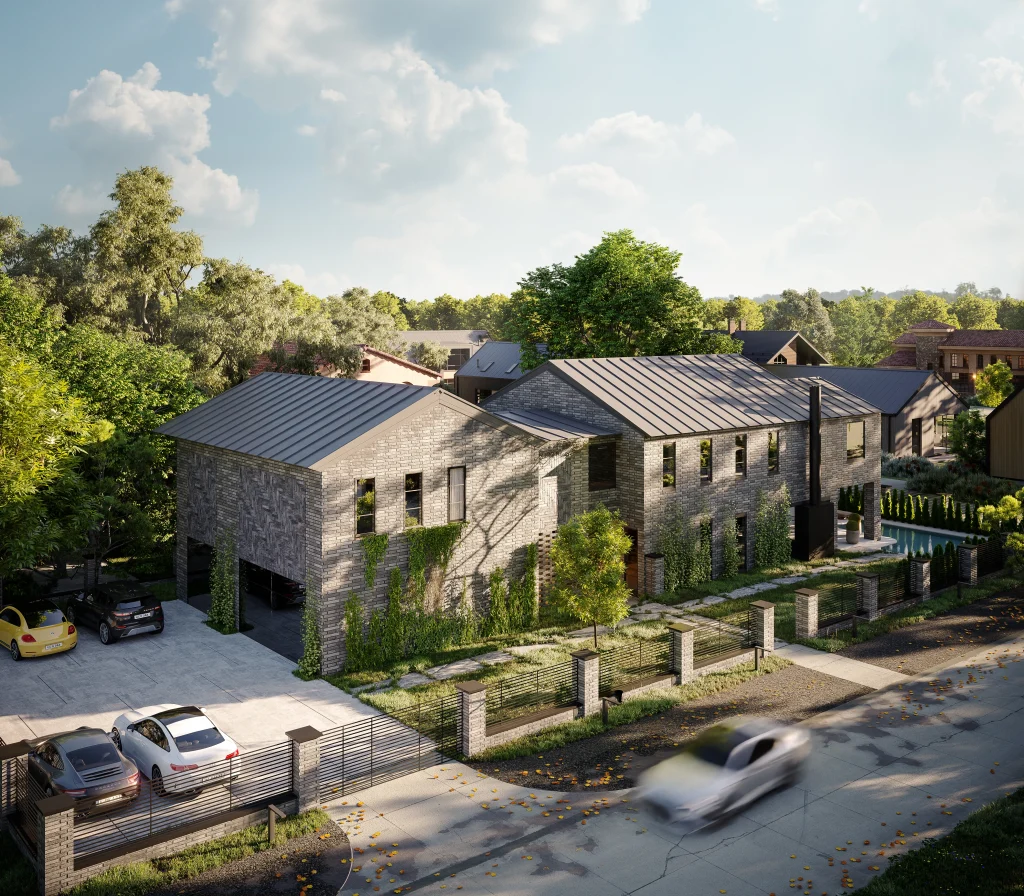
Exterior renders are the most in-demand format for architectural and real estate projects. Pricing depends on building scale, surrounding context, number of environmental elements, and the required level of photorealism.
Residential exteriors: $350–$1,500 per image for single-family homes and townhouses. Projects with complex landscaping, difficult site context, or highly detailed facades sit at the higher end.
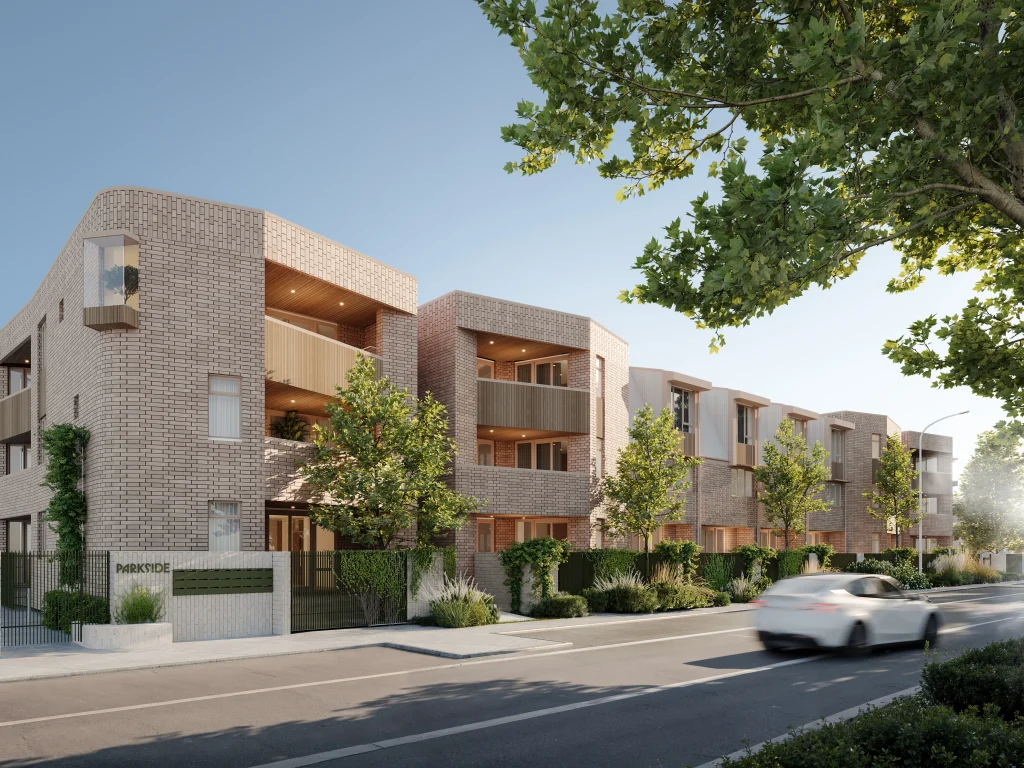
Commercial exteriors: $400–$2,000 per image. Larger footprints, urban context modeling, and multiple stakeholder requirements add to production complexity and cost.
Explore 3D Exterior Rendering services for residential and commercial projects.
Interior Rendering
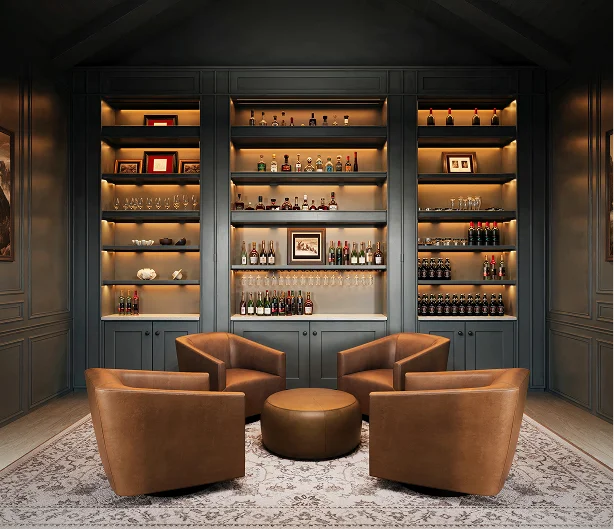
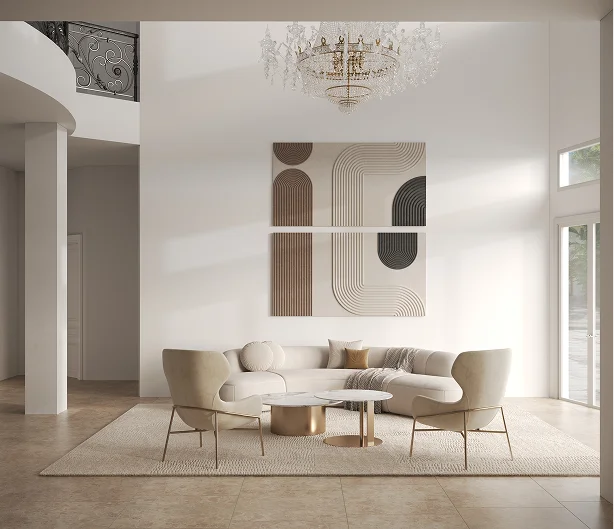
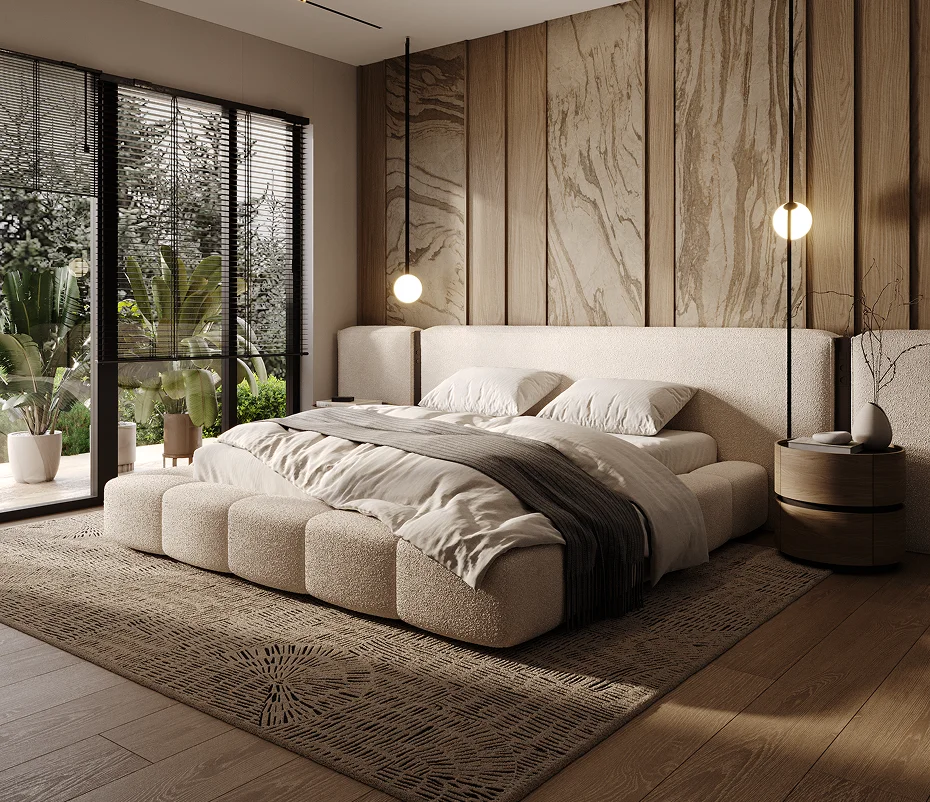
Interior renders are priced based on material complexity, furniture detail, lighting behavior, and the number of custom elements required. Standard residential and commercial interiors typically fall in the $400–$1,200 per image range.
Projects requiring custom furniture modeling, high-end material libraries, or complex lighting setups — such as luxury residential or hospitality interiors — sit toward the upper end. Simpler spaces with standard furniture and straightforward lighting are produced faster and priced accordingly.
Explore 3D Interior Rendering services for residential and commercial projects.
3D Floor Plans

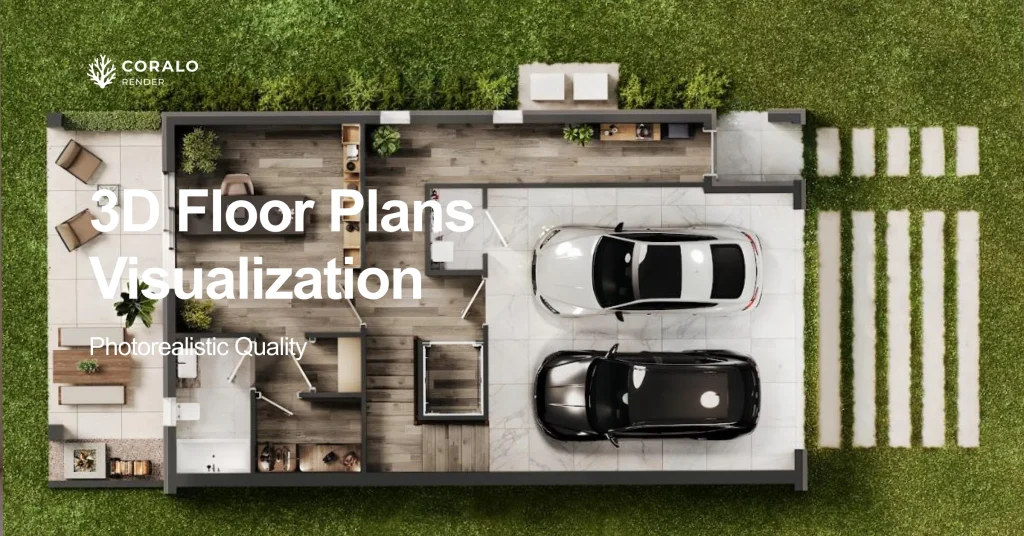
Rendered floor plans typically range from $450 to $1,200 per image. They require less production time than still renders and are commonly delivered alongside exterior or interior images as part of a pre-sale marketing package. Pricing is influenced by the size of the floor plate and the level of furniture and material detail included.
Explore 3D Floor Plans for development and pre-leasing applications.
Virtual Tours
Professional virtual tour production — including high-resolution panoramic scenes and interactive navigation — typically ranges from $500 to $3,000 or more per project. Pricing is driven by the number of scenes, level of detail per scene, and the degree of interactivity required. Projects with a single key space cost significantly less than multi-room or multi-unit tours.
Explore 3D Virtual Tours for residential and commercial projects.
Architectural Animation
Animation is priced per finished minute of output and varies substantially by production quality:
Standard walkthrough animation: $3,500–$5,000 per minute. Controlled camera movement, limited asset count, functional spatial presentation.
Marketing-quality animation: $4,000–$10,000 per minute. Fully developed environments, consistent lighting across sequences, refined motion design.
High-end / VR experiences: $5,000–$20,000+ per project. Real-time optimization, interactive elements, performance stability across devices.
Explore 3D Animation services for development marketing and investor presentations.
What Drives 3D Rendering Cost: Key Factors
Two projects of the same type can differ substantially in price. These are the factors that account for most of that variation.
Project Complexity and Scale
Building size, site context, and the number of elements that need to be modeled all affect production time directly. A single-family home on a simple lot requires far less geometry than a mixed-use development with a complex urban context, multiple building masses, and detailed landscaping. Large-scale projects also typically involve more review cycles and coordination, which adds to overall cost.
Level of Detail and Quality
A concept render for internal design review and a marketing render for an investor presentation may both show the same space — but they require very different production effort. High-end photorealistic renders involve advanced lighting setups, precisely matched materials, refined post-processing, and careful art direction. That level of quality takes time, and time determines cost.
Turnaround Time
Standard delivery for a typical architectural render is 3–5 business days. Rush requests — two to 2 business days — require parallel workflows or extended production hours and typically add 20–50% to the base price. If your project has a hard deadline, communicate it upfront so it can be factored into the quote.
Number of Revisions
Most studios include a defined number of revision rounds in the base price. Minor adjustments — material swaps, lighting tweaks, camera angle changes — are typically handled within this scope. Structural changes to the design or significant rework of the model after production has begun require additional effort and are priced accordingly. Finalizing design intent before rendering starts is the most reliable way to control this cost.
Input Quality
Complete, detailed inputs produce faster results and more accurate quotes. CAD files, elevation drawings, material specifications, and reference images allow the studio to model precisely from the outset. Projects that begin with rough sketches or incomplete information require more interpretive work from the studio — which is reflected in both price and timeline.
Pricing Models: How Studios Charge for 3D Rendering
Understanding how a studio structures its pricing helps you compare proposals accurately and choose the model that fits your project.
Per Image Pricing
The most common model for still renders. Each image is priced individually based on its type and complexity. This works well for projects with a clearly defined set of deliverables — for example, three exterior renders and two interior renders — where the scope is stable from the start.
Project-Based or Package Pricing
A fixed price covering all visualization deliverables for a project. This model becomes more efficient as project scale increases: shared 3D models, lighting setups, and material libraries reduce the cost per image compared to ordering each render individually. Volume discounts are typically applied within project packages. For multifamily developments, commercial projects, and full design presentation packages, this is usually the most cost-effective structure.
Hourly Rate
Used for ongoing work, minor revisions to existing renders, or projects where the full scope cannot be defined upfront. Professional studios typically charge between $50 and $150 per hour depending on their location, team structure, and the type of work involved. This model is transparent but less predictable — it works best for small, well-scoped tasks rather than full render production.
Architectural Rendering Costs by Project Type
Per-image pricing is useful as a reference point, but most clients want to understand what a complete visualization package will cost for their specific project type. These are realistic budget ranges for common project categories.
Single-Family Residential
A typical package includes two to three exterior renders, one to two interior renders, and a floor plan. At standard market rates, this falls in the $3,000–$5,000 range depending on architectural complexity, site context, and material detail. Custom homes with complex detailing or difficult sites sit toward the upper end.
Multifamily or Condo Development
Pre-sale marketing for a multifamily project typically requires four to six exterior renders from different angles and lighting conditions, three to five interior renders covering key unit types, and floor plans for each layout. Full packages for projects of this type generally range from $6,000 to $10,000 or more, depending on the number of units, building complexity, and marketing requirements.
Commercial and Mixed-Use
Commercial visualization packages typically include exterior renders with full urban context, lobby and key interior renders, and often an aerial view. Full packages for commercial or mixed-use developments generally range from $10,000 to $30,000+ depending on building scale, site complexity, and the number of views required.
Interior Design Projects
A complete interior visualization package for a residential or commercial space — covering three to six rooms or areas — typically falls in the $1,800–$5,000 range. Pricing is driven by the number of spaces, custom furniture requirements, and material complexity. Luxury interiors with custom detailing sit at the higher end.
How to Get the Most from Your Rendering Budget
Reducing rendering cost does not require reducing quality. Most savings come from better preparation and smarter project structuring.
Provide complete inputs upfront. Detailed CAD files, material specifications, and clear reference images reduce the time a studio spends on interpretation and minimize revision rounds. Incomplete inputs are one of the most common causes of budget overruns on rendering projects.
Batch your renders. Ordering multiple renders from the same project is substantially more cost-effective than ordering individually. Studios reuse the 3D model, lighting setup, and asset library across all views — which reduces the cost per image as the number of deliverables increases.
Separate concept renders from final renders. High-quality photorealistic renders are not always necessary at the early design stage. Faster, lower-cost concept images serve internal review and design development just as well — and preserve your budget for the marketing-quality visuals that actually need it.
Define scope before production starts. Changes introduced after rendering has begun — revised floor plans, new material directions, structural design changes — require partial rework and increase cost. A clearly defined brief and stable design intent at the start of production is the most reliable way to keep a rendering project on budget.
Ask about package pricing. For projects requiring multiple renders, a project-based package is almost always more cost-effective than per-image pricing. Ask your studio for a package quote whenever the scope includes more than two or three deliverables.
Coralo Render provides transparent project-based pricing with a clear revision policy. Get in touch to receive a quote based on your specific project scope — no generic templates, no hidden costs.
Ready to Get a Quote for Your Project?
Need an accurate price for your 3D rendering project? Coralo Render provides photorealistic architectural visualization with transparent pricing and clear delivery timelines. From a single exterior render to a full development visualization package — Get in touch to discuss your project and receive a personalized estimate.
Frequently Asked Questions
How much does a 3D rendering cost?
3D rendering costs vary by type and complexity. Exterior architectural renders typically range from $500 to $2,000 per image; interior renders from $350 to $1,200; floor plans from $500 to $1,200. Animation starts at $3,000 per finished minute for standard quality. The final price depends on project complexity, level of detail, turnaround time, and number of views required.
How much does a 3D rendering of a house cost?
A single photorealistic exterior render of a house typically costs between $500 and $2,000 depending on architectural complexity, site context, and level of detail. A complete single-family home package — two to three exterior renders, one to two interior renders, and a floor plan — generally falls in the $3,000–$6,000 range.
What is the average 3D rendering cost per hour?
Most professional visualization studios charge between $50 and $150 per hour for hourly work. Hourly pricing is typically used for small revisions, material updates, or projects where the scope cannot be fully defined upfront. For clearly scoped projects, per-image or fixed project pricing is usually more cost-effective and predictable.
What factors affect 3D rendering prices most?
The main factors are project complexity and scale, the required level of photorealism, turnaround time, the number of images, and the quality of input files provided. Rush delivery, structural design changes after production begins, and custom modeling from scratch all increase cost significantly compared to well-prepared standard projects.
What is typically included in the price of a 3D render?
A standard render price includes 3D modeling (if no existing model is provided), material and texture application, lighting setup, rendering, and basic post-processing. The number of revision rounds included varies by studio — confirm this before starting. Rush delivery, animation, and additional camera angles are typically priced separately.
Are architectural rendering prices negotiable?
Most professional studios offer volume discounts for larger projects or ongoing work. Providing complete, detailed inputs upfront reduces production time and can result in a lower quote. Batching multiple renders from the same project as a package is consistently more cost-effective than ordering individually.
How much does 3D architectural rendering cost for a commercial project?
Commercial exterior renders typically range from $500 to $2,000 per image. Full visualization packages for commercial or mixed-use developments — including exterior renders, interior views, and an aerial — generally range from $5,000 to $20,000 or more depending on building scale, number of views, and project complexity.